
- What Is a Work As Executed WAE Survey
- What Does WAE Survey Mean in Construction
- Why WAE Survey is Important
- How a Work As Executed WAE Survey Is Conducted
- WAE Survey Submission Requirements in NSW
- The Role of a Construction Surveyor
- Where WAE Surveys Fit Among Other Types of Surveys
- Cost of a Work As Executed Survey in Sydney
- Common Issues Found During WAE Surveys
- How to Prepare or Request a WAE Plan
- What to Expect When a Surveyor Comes to Your Site
- Frequently Asked Questions
- Why Local Experience Matters
When a construction project finishes, the next step is not simply handing over the keys. It is confirming that what has been built matches what was approved. That is where a Work As Executed WAE survey, also called an As-Built survey, becomes essential.
Across Sydney, councils, engineers, and certifiers rely on WAE surveys to verify that completed works align with approved design drawings. These surveys record the final position, level, and dimensions of every relevant element, from stormwater pipes to boundary walls. Without them, projects can stall before final sign-off.
At East West Surveyors, we specialise in practical, on-the-ground services that support residential and light-commercial projects, including Work As Executed surveys. Our team combines field accuracy with council submission requirements, ensuring that every plan you submit reflects what is actually on site.
What Is a Work As Executed WAE Survey
A Work As Executed survey is a precise record of how a project was built. It compares the constructed works to the original approved design to confirm compliance. In most cases, it is required by local councils, developers, or asset owners before they grant a completion certificate or accept new infrastructure.
A WAE survey identifies the exact location, height, and alignment of all completed structures or services. This can include:
- Drainage and stormwater systems
- Sewer connections and manholes
- Driveways and kerbs
- Retaining walls and fences
- Building corners, slabs, and finished levels
- Underground services or utilities
The survey ensures that these elements have been built within the permitted tolerances and according to the plans lodged at approval stage.
What Does WAE Survey Mean in Construction
In construction, WAE stands for Work As Executed. It refers to the verified, surveyed record of what has been constructed on a site. While design drawings show what was planned, WAE plans show what was built.
A WAE plan is prepared by a registered surveyor once construction is complete or near completion. The plan is then submitted to councils, engineers, or asset owners for approval. These plans are often mandatory for drainage infrastructure, subdivisions, roadworks, and public assets.
The key difference between design and WAE drawings lies in verification. A WAE plan does not rely on assumptions or builder reports. It confirms each measurement using professional surveying instruments.
Why WAE Survey is Important
Accurate WAE surveys are critical for several reasons:
- Verification: Confirms the works were completed according to design specifications and within permitted tolerances.
- Compliance: Satisfies local council, developer, and engineering requirements for final approval.
- Handover: Allows project owners to obtain Occupation Certificates or final subdivision plans.
- Future Maintenance: Provides a reliable reference for upgrades, repairs, or service location.
- Risk Reduction: Identifies discrepancies early so they can be corrected before certification.
In Sydney, councils such as Shellharbour and Wollongong have clear guidelines for WAE submissions, often requiring both PDF and CAD (DWG) formats prepared by a registered surveyor. Without this documentation, approvals can be delayed, adding cost and time to the project.
How a Work As Executed WAE Survey Is Conducted
A typical WAE survey follows a clear process:
- Review of Design Plans – The surveyor examines approved construction drawings and specifications.
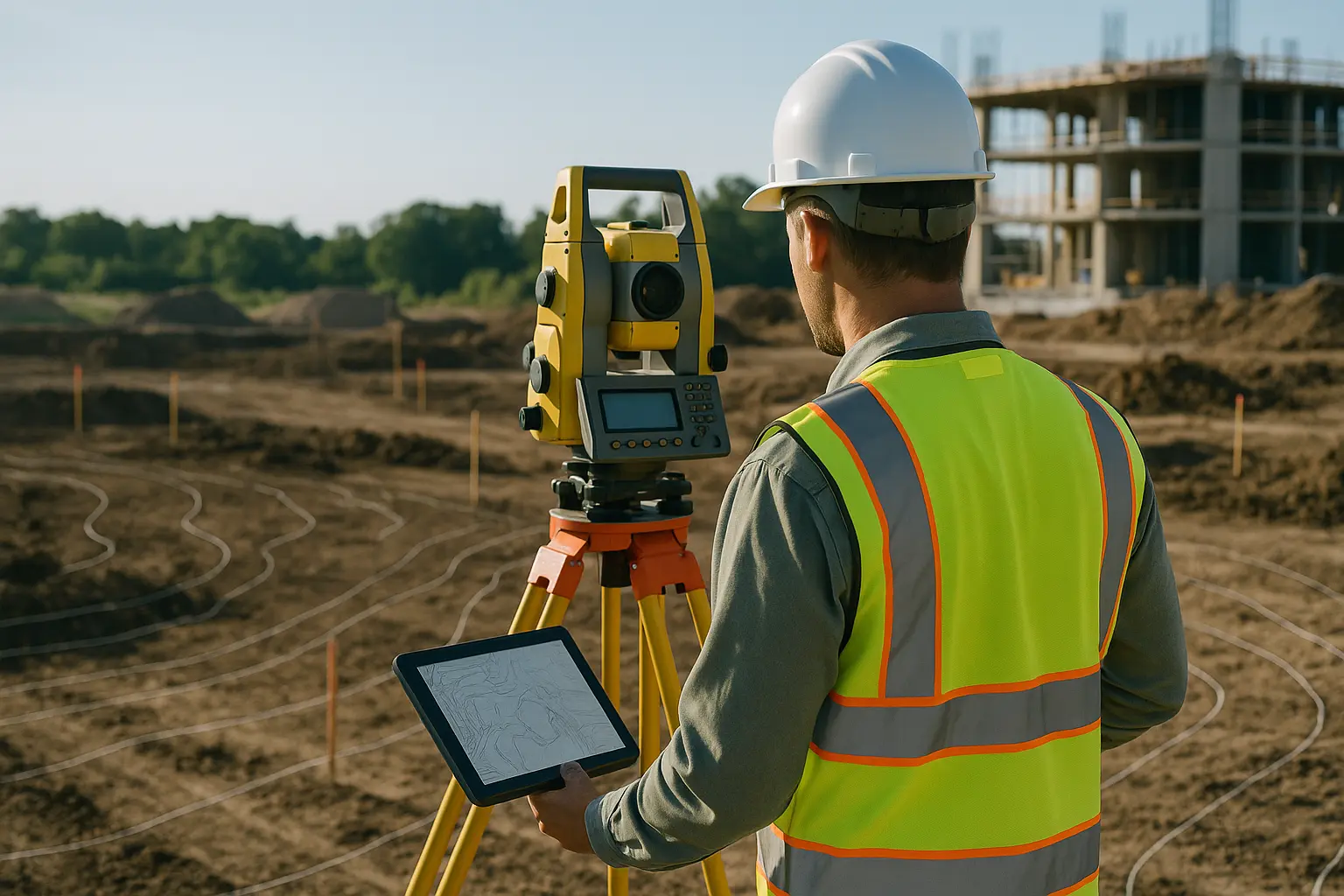
- Site Measurement – After the works are completed, the surveyor visits the site and records the position, levels, and dimensions of relevant features using GPS, total stations, or laser instruments.
- Data Comparison – The field data is compared against design values to detect any deviations.
- Plan Preparation – The surveyor drafts a Work As Executed plan, clearly marking measured data and noting any variances.
- Certification and Submission – The plan is certified by a registered surveyor and submitted to council or the supervising engineer for review.
This process ensures every element, from drainage pits to building corners, is documented precisely.
WAE Survey Submission Requirements in NSW
Different councils across New South Wales have their own WAE submission standards, but most follow similar principles:
- Plans must be prepared and certified by a Registered Surveyor under the Surveying and Spatial Information Act 2002.
- Both PDF and AutoCAD (DWG) files may be required.
- Elevations must reference Australian Height Datum (AHD) and coordinates must be based on the relevant projection such as MGA Zone 56.
- The survey must include all relevant constructed assets such as drainage lines, pits, driveways, and retaining walls.
- Tolerances must generally fall within ±20 mm horizontally and ±10 mm vertically.
Government and infrastructure agencies including Transport for NSW and the Department of Planning have also published guidelines outlining standard formats for stormwater and road asset documentation.
By working with an experienced local surveyor, you can ensure your submission meets all these technical requirements the first time.
The Role of a Construction Surveyor
A construction surveyor plays a vital role in ensuring that design intent becomes built reality. During construction, they assist with:
- Setting out foundation and structural points
- Checking that levels and alignments match design specifications
- Conducting progress checks and adjustments
Completing the final WAE survey to document finished conditions
The surveyor acts as the link between engineering design and built form. At East West Surveyors, our team provides consistent support through each stage, ensuring the final WAE plan reflects accurate, verifiable data.
Where WAE Surveys Fit Among Other Types of Surveys
In construction and development, several survey types work together across a project’s life cycle:
- Detail and Contour Surveys record the site’s existing features before design begins.
- Set-Out Surveys mark the exact location for construction during building.
- Work As Executed Surveys record what has actually been built.
- Identification or Boundary Surveys confirm the legal property boundaries.
Each serves a distinct purpose, but the WAE survey is often the final and most crucial step that confirms everything has been completed correctly.
Cost of a Work As Executed Survey in Sydney
The cost of a WAE survey depends on project size, complexity, and the number of features to record.
Typical price ranges:
- Residential or small projects: $800 to $1,500
- Medium construction or drainage projects: $1,500 to $3,000
- Large civil or infrastructure works: Quoted individually
Costs vary depending on:
- The number of assets to measure
- Access conditions and safety requirements
- Council formatting and digital submission needs
- Whether multiple stages or revisions are required
Choosing a qualified surveyor ensures the work meets council and engineering standards the first time, helping you avoid costly rework or delays.
Common Issues Found During WAE Surveys
Some discrepancies are common in the final stages of construction:
- Drainage pits or pipes slightly out of alignment
- Driveways or slabs built higher or lower than specified
- Retaining walls extending beyond design boundaries
- Incorrect or missing data in previous plans
Most of these can be corrected before certification. The surveyor’s report helps engineers identify any adjustments required to bring the works into compliance.
How to Prepare or Request a WAE Plan
Here is how Sydney homeowners and builders can arrange a WAE plan efficiently:
- Plan Ahead – Engage a surveyor early, ideally before completion.
- Provide Documents – Share approved drawings and any variations made during construction.
- Schedule Field Work – The surveyor visits the site once all works are complete and visible.
- Review and Certify – Receive the certified plan for submission to council or engineer.
Working with a surveyor who understands local council requirements can prevent unnecessary back-and-forth. At East West Surveyors, we handle both field work and digital formatting to meet NSW standards.
What to Expect When a Surveyor Comes to Your Site
When a surveyor arrives, they will bring specialised equipment such as tripods, reflectors, and GPS units. They may need access to all areas of the property, including driveways, side paths, and service points.
The visit is usually efficient and causes minimal disruption. The goal is to capture precise measurements quickly and safely so the WAE plan can be finalised.
Frequently Asked Questions
- What does WAE stand for?
Work As Executed, a record of what was built on site. - What is a WAE plan?
A certified drawing showing the actual constructed levels, locations, and dimensions of all key features. - How long does it take to prepare a WAE survey?
For small residential sites, usually one to three days from field work to certified plan. Larger projects may take longer depending on complexity. - Is a WAE survey mandatory?
Most Sydney councils and developers require a certified WAE plan before final approval or occupation certificate. - What is the difference between a WAE survey and a boundary survey?
A boundary survey defines property limits, while a WAE survey documents constructed features within those limits. - Can I submit a builder’s plan instead?
No. Only a registered surveyor can certify WAE plans for compliance in New South Wale
Why Local Experience Matters
Sydney’s varied landscapes, from steep coastal areas to compact city lots, make precision essential. Local experience ensures your plans meet specific council and utility requirements.
At East West Surveyors, our team works closely with homeowners, builders, and engineers to produce accurate, compliant, and clearly presented Work As Executed surveys. We understand the submission formats required by NSW councils and infrastructure authorities, helping you complete every project with confidence.
Every project finishes with a plan. Make sure yours shows exactly what has been built, prepared with accuracy you can trust.